A Kenyan court has allowed rice importation to continue but capped it at 250,000 metric tonnes a year. Read as a headline, it sounds like protection for local rice Kenya growers. Read as a planning input, it is a much narrower thing: a ceiling on how much rice can enter the country, not a floor under what a farmer actually harvests. Kenya's own demand runs to roughly 1.3 million metric tonnes a year against domestic production covering only about a fifth of it, a deficit of more than 80 percent, according to the reporting on the ruling itself. A 250,000-tonne cap on imports narrows that gap on paper. It does not touch the reason the gap exists on any single farm.
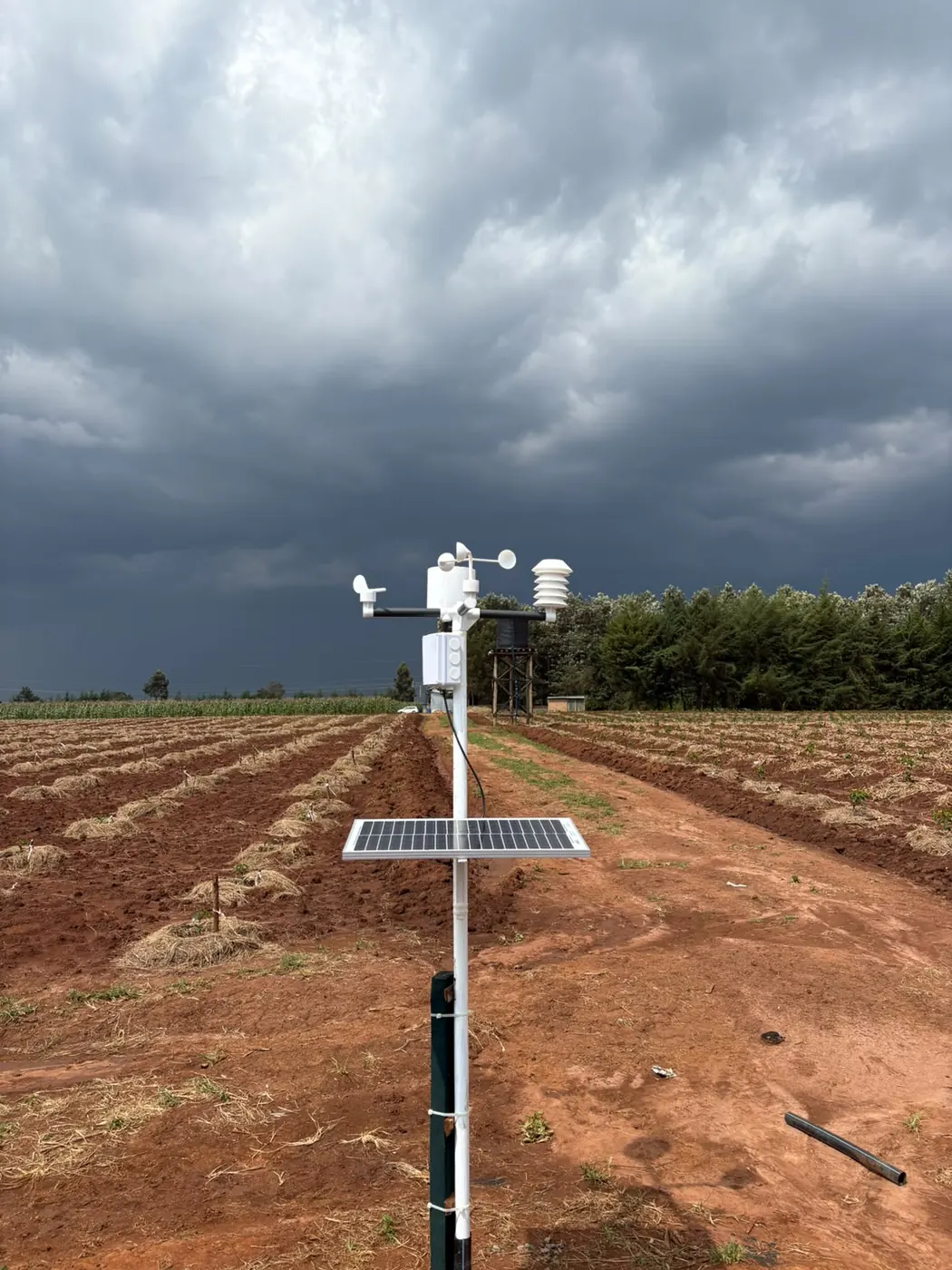
Measured by NuaSense weather stations and soil probes on Kenyan farms, over the period stated with each figure. Past readings, not a forecast.
What the deficit looks like in bags, not tonnes
Kenya milled about 112,000 tonnes of rice domestically in 2018, against a national target of 846,000 tonnes by 2030, according to AfricaRice's account of Kenya's Rice Sector Development Hub approach. Consumption is projected to reach 1,292,000 tonnes by the same year. That is a production gap of roughly 1.18 million tonnes still to close, cap or no cap. Per capita consumption has already climbed from 12 kg in 2008 to 20.6 kg in 2018, so the gap is not closing on the demand side either.
For a grower in Mwea, the scheme that carries most of Kenya's irrigated paddy, the more useful number is the one at farm level: an acre typically yields 25 bags. That figure moves before any tonnage figure does, because it is set by disease and water, not by trade policy. A cap on imports raises the ceiling price local rice can fetch when supply is short. It does nothing about the acre that yields 10 bags instead of 25.
The decision this ruling actually puts in front of you
Strip away the trade politics and a grower faces one practical choice this season: spend the next few months assuming the cap lifts your price and plant as before, or spend that time and some cash closing the gap between 10 bags and 25 on your own plot. Those are different bets with different payoffs, and the ruling only makes the first one look more attractive than it is. A price floor that depends on a court order surviving appeal, and on the cap actually being enforced at the border, is a thinner thing to plan around than a yield gain you control on your own land.
The rest of this piece treats that as the real decision: ride the price protection, or fix the yield constraint. Three concrete paths follow, with what each one costs and what it buys, laid out so you can weigh them against your own scheme.
Option one: plant as usual and let the price do the work
This is the default, and it is not irrational. It costs nothing extra beyond a normal season's inputs. If the cap holds and enforcement is real, local paddy should command a firmer price simply because 90 percent of national rice consumption has historically been met by imports, per the Economic Survey figures cited by AfricaRice, and any binding cap on that share tightens local supply. The upside is a better price on the same output you were already going to get.
The weakness is that this path does nothing about the 60 to 100 percent yield loss that rice blast disease can inflict, documented in Mwea by researchers who found 76 percent of surveyed farmers had already been affected and 98 percent were aware of the disease, according to the study of rice blast's impact on livelihoods in Mwea. A better price on a blast-damaged crop is still a small number multiplied by a slightly larger one. If your block has a blast history, this option leaves your biggest single risk untouched while you wait on a policy holding steady through appeal.
There is a second, quieter risk with option one that is worth naming plainly: the cap is a court ruling, not a statute, and a court ruling can be appealed, narrowed, or reinterpreted at the border in ways a grower has no visibility into. Betting a season's income on 250,000 tonnes staying the effective number, and on customs actually holding importers to it, is a bet on enforcement machinery you cannot inspect from a rice block in Kirinyaga. That does not make the bet wrong. It makes it a bet on a variable outside your control, sitting next to two others, blast and water, that are inside it.
Option two: spend the season on blast control
The same Mwea study puts the arithmetic plainly: an acre that should yield 25 bags can fall to 10 bags under blast pressure, and the disease destroyed 5,600 hectares in Central Province in the outbreak years studied, equivalent to 10 to 20 percent of annual national output. That is not a marginal loss. Closing even part of that gap, on a farm that already has water sorted, moves more bags per acre than any price change from an import cap could.
The cost side is real too: resistant variety uptake, fungicide where justified, and closer attention to the crop through the vulnerable stages, all of which take time and cash a grower planning to just ride the cap will not spend. The payoff is asymmetric in a useful way. A grower who halves blast losses on a block that was running at 10 bags moves toward the 25-bag ceiling regardless of what the import cap does to price. That gain is under your control in a way the court ruling is not.
Option three: fix water timing before you fix disease
Mwea's own water problem sits underneath the disease numbers. The scheme's optimal growing season runs August to December, but river flows are lowest during exactly that window, which is why the scheme staggers planting across farmers rather than starting everyone together, a constraint documented in the Mwea disease study. Across East Africa more broadly, up to 90 percent of smallholder rice is grown under traditional flooding or rain-fed management, with water scarcity flagged as a major constraint on the whole sub-sector, per the Springer review of rice as a component of East African food security.
Alternate wetting and drying and the System of Rice Intensification are named in that review as practices that could raise productivity without new land, but adoption among smallholders is described as limited. That gap matters because water stress and blast pressure interact: a crop under uneven flooding is also a crop under more disease stress. A grower weighing option two against option three should treat them as connected, not separate, investments. The same logic on measuring soil conditions before acting, rather than working off the calendar, is laid out for a different crop in the piece on coffee, nematodes and water, and it transfers here: knowing the water status of the plot before you spend on disease control tells you which lever actually moves the yield.
Weighing the three paths against each other
- Ride the price cap: cost is nil beyond a normal season; payoff is a firmer local price if enforcement holds, with no change to your yield ceiling; risk is that the ruling survives appeal and border enforcement actually bites.
- Blast control on an affected block: cost is variety, fungicide and closer monitoring through vulnerable growth stages; payoff is a move from roughly 10 bags an acre toward the 25-bag scheme average, independent of any price change; risk is spending on a block where blast was never the binding constraint.
- Water management fixes (AWD, staggered timing, SRI-style practice): cost is higher management attention and, on some blocks, new equipment; payoff is a productivity gain without new land, and it reduces the disease pressure that follows uneven flooding; risk is that adoption of these practices among East African smallholders has so far been limited, per the Springer review, so the local evidence base for exactly how much yield they add on a Kenyan block is thin.
- Do nothing differently: cost is nil; payoff is whatever the price cap delivers on your existing yield; this is the option most growers will default into by inertia rather than by comparing it against the others.
None of these three is free, and none is guaranteed. The point of laying them out side by side is that the import ruling only strengthens the first row of that table. It leaves the other three exactly where they were before the court sat. And the three are not mutually exclusive in the way a table makes them look. A grower with cash for one intervention this season, not three, still has to rank them, and the ranking depends on which constraint is actually binding on that specific block, which is a question the table cannot answer for you. It only tells you what each answer would cost and what it would buy if you were right about which one applies.
Why the hub approach splits Kenya into different bets
Kenya's own rice strategy already treats the country as several different problems rather than one. Nine Rice Sector Development Hubs have been identified across three ecologies: lowland irrigated, lowland rainfed and upland rainfed, according to AfricaRice's account of the hub approach. The Central Hub, covering Kirinyaga, Murang'a and Embu, and the Taita Taveta Hub are both named as sites of the EARiSS project, a three-year regional initiative running 2019 to 2022 and funded by IFAD.
That matters for how you read the three options above, because they do not pay off equally in every hub. A lowland irrigated grower in the Central Hub, with a functioning canal system, is closer to option two: water is mostly solved, so disease control is the marginal lever. A grower in a rainfed hub is closer to option three, where the water constraint is the one worth solving first, because no amount of blast control fixes a crop that never gets consistent moisture in the first place. Taita Taveta's county government has moved to purchase a rice mill for its farmers, a hub-specific investment in the milling side of the chain rather than the field side, which is a reminder that even within one country the constraint that pays off first is not the same everywhere. A grower reading this piece from a different hub should treat every figure above as a Mwea and Central Hub number until proven otherwise on their own scheme.
Where milling still throttles the whole chain
Even a grower who solves both water and disease on their own plot sells into a value chain with its own bottleneck. An FAO-led review of rice value chains across Kenya, Senegal and Tanzania identified milling, along with nutrition, employment, access to finance, farmer-miller linkages and food safety, as specific points where the chain constrains growers, according to the FAO report on developing efficient and inclusive rice value chains. The same review lists low productivity, weak mechanisation, poor seed supply and poor water control as the recurring problems across all three countries studied, which puts water and disease control, the two options above, squarely inside the list of things the sector already knows it needs to fix.
Kenya's rice trade already runs mostly one direction: exports of semi-milled or wholly milled rice totalled 5.4 million kilograms worth $3.07 million in 2024, and the Democratic Republic of Congo alone took $2.52 million of that, according to World Bank trade data on Kenya's rice exports by destination. Djibouti, Ethiopia, Uganda, Rwanda and Tanzania made up the rest, all in much smaller volumes. That export volume is a rounding error against the 1.18-million-tonne domestic gap. It tells you Kenya is not short of milling capacity in the abstract, since some rice clears the chain well enough to export; it tells you the constraint is upstream, in the volume and consistency of paddy reaching the mill, which is exactly where blast and water sit.
What a soil and weather record actually tells you before you commit
Whichever of the three options you lean toward, the decision improves with a season of your own measurements rather than a guess at what the scheme average is doing. A grower weighing whether water or disease is the binding constraint on a given block needs to know how consistently that block is wetting up, not how the scheme behaves on average. That is the same argument made for checking a measured infiltration rate rather than a textbook irrigation figure: a scheme-wide number tells you what to expect, not what your plot is actually getting.
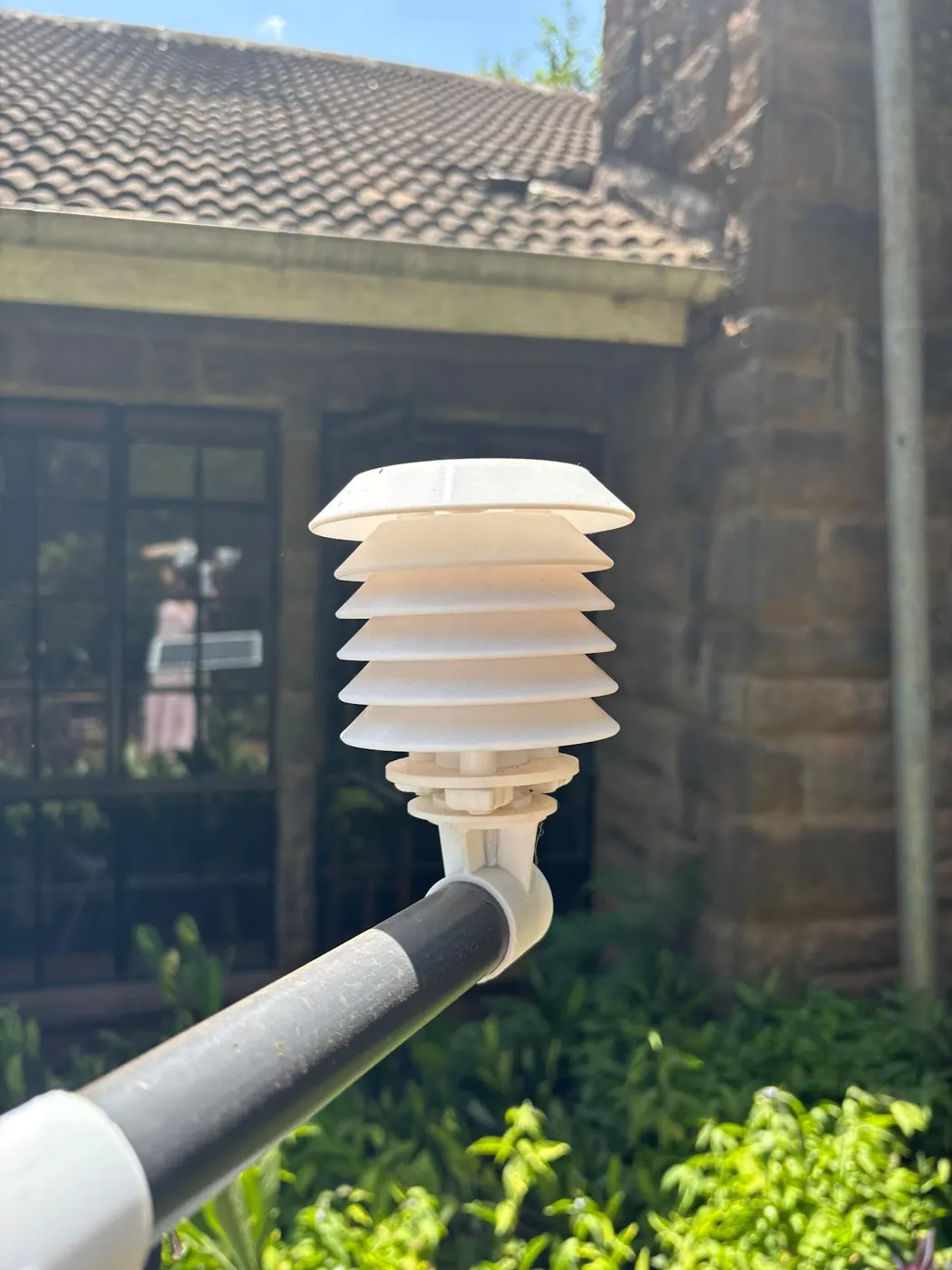
A weather station recording rainfall, humidity and evapotranspiration over a season, alongside soil probes reading moisture at two depths, turns the water-versus-disease question from a guess into a comparison you can check week by week. That is the kind of instrumentation NuaSense's sensor and alert system for farms is built to run: field hardware reporting continuously, with the intelligence layer flagging when moisture or leaf wetness conditions favour blast development, before symptoms show. Neither the sensors nor this article can tell you which of the three options above pays off best on your specific plot. What a season of measurement can do is stop you spending on the wrong one.
What to actually do with the cap in front of you
Treat the 250,000-tonne cap as background, not as your plan. It may firm up the local price if it survives appeal and border enforcement is real, and there is no harm in banking that as upside. But do not let it substitute for the decision that actually moves your output: whether your own block is water-limited, disease-limited, or reasonably close to its ceiling already. Mwea's own numbers, a 25-bag potential falling to 10 under blast pressure, and a growing season fighting the river's lowest flows at exactly the wrong time of year, say that for a lot of Kenyan rice growers, the limiting factor was never the import shelf. It was the water and the leaf. A court ruling on tonnage does not change either one. Your own season's measurements, and what you choose to spend on the back of them, will.